What Does a Public Health Nurse Do?
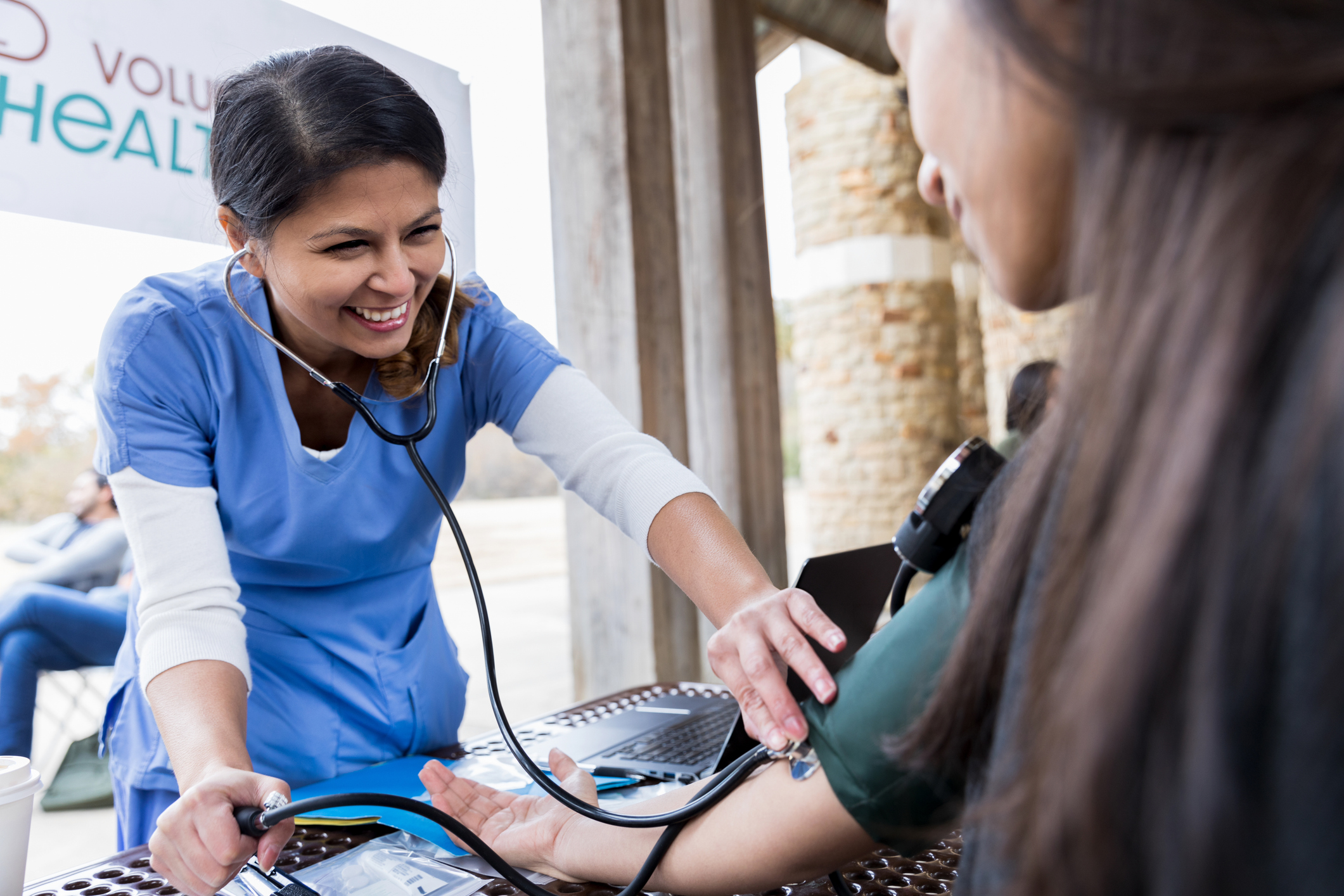
Public health nurses are health advocates for communities. Rather than focusing on treating patients in hospitals or clinics, public health nurses care for the health of populations at large, educating people on disease prevention, available healthcare programs, and caregiving resources for families of at-risk individuals.
Because of their educational role in preventing health risks, there is strong demand for public health nurses at health agencies, in home healthcare, and in other nursing education settings. Nurses who are interested in public health careers can explore pursuing a Registered Nurse to Master of Science in Nursing (RN to MSN) program that prepares them for educational roles that help families and individuals live healthy, fulfilling lives.
Public Health Nurse Job Description
Public health nurses are RNs who apply knowledge from medical, social, and public health science to promote improved health in communities. Their main goals are to prevent disease and disability and to promote health among various populations in community-wide settings, such as schools, community centers, nonprofit organizations, hospitals, and clinics.
Common responsibilities include the following:
Educating groups through presentations about disease prevention or nutrition
Providing direct care services such as immunizations, prenatal care, or screening tests
Designing health promotion campaigns for vulnerable populations
Analyzing health trends and identifying at-risk communities
Advocating for health policies at the local, state, and federal levels
A typical day for public health nurses depends on where they work and their specific role. Nurses in remote rural areas may travel to educate families about local healthcare programs, while urban public health nurses may interact with different populations through workshops on mental health, disability care, or chronic disease management.
Because public health is a broad field, nurses can work in roles such as prevention coordinator, community health worker, or health education specialist in private-sector, state, federal, and nonprofit organizations. With continued education and experience, professionals can advance into leadership positions such as director of a state agency or an education program director for schools or community organizations.
Where Do Public Health Nurses Work?
Public health nurses typically work with at-risk populations, such as older adults, people with disabilities, and low-income communities that lack accessible care.
They can work in settings such as senior centers, correctional facilities, worksites, or mobile vans to reach these populations and educate them on best health practices.
Public health nurses can work in any setting, from cities and suburbs to public parks, universities, colleges, and public schools.
Nurses specializing in public health also work for local, state, and federal government agencies, tracking outbreaks, promoting immunization programs, collecting health data, and responding to health crises.
Many also work for international organizations such as the United Nations (U.N.), the World Health Organization (WHO), and the International Council of Nurses (ICN), using their expertise to advise, lead, and influence global policies. Nursing leaders who work in global healthcare can help address crises during national disasters, famines, and disease outbreaks.
What Are the Requirements to Become a Public Health Nurse?
RNs interested in becoming public health nurses can earn specialized degrees and training, particularly with public health organizations or health advocacy groups. Below are the steps nurses can take to work in the public health field.
Step 1: Earn a Nursing Degree
Earning an Associate Degree in Nursing (ADN) or a Bachelor of Science in Nursing (BSN) from an accredited nursing program gives nurses the necessary fundamental education and is required to become licensed as an RN.
Step 2: Pass the NCLEX-RN
After earning a nursing degree, candidates can sit for the National Council Licensure Examination for Registered Nurses (NCLEX-RN). The exam tests practical application and analysis of the knowledge, skills, and decision-making abilities developed in nursing school. Passing the NCLEX-RN is required to become an RN.
Step 3: Apply for a Nursing License
Candidates can apply for a nursing license in the state where they intend to practice. Each state has different requirements for licensure, so nurses must first check that state’s requirements. Nurses who live in a Nurse Licensure Compact (NLC) state, such as Pennsylvania, can apply for a multistate license that allows them to practice in other compact states.
Step 4: Gain Experience as an RN
To become a public health nurse, nurses generally need at least 2,000 hours of experience as RNs in entry-level roles such as bedside nurse or home health nurse. Many employers prefer nurses to have direct experience in public health, such as volunteering at local community groups or health advocacy centers.
Step 5: Obtain Certification and Earn an Advanced Degree
Certifications in public health can also help nurses demonstrate expertise to potential employers. The Advanced Public Health Nursing Certification (PHNA-BC) offered by the American Nurses Association (ANA) and the National RN Population Health Nurse Certificate Program from the National Registered Nurse Practice Development Center can teach RNs how to apply public health concepts in their practice and provide resources to the community.
RNs who want to specialize in a specific area of nursing, attain senior leadership positions, and earn higher salaries can consider pursuing a Master of Science in Nursing (MSN) degree.
Public Health Nurse Salary and Job Growth
Public health nurses earned a median annual salary of approximately $74,000 as of January 2026, according to Payscale. The U.S. Bureau of Labor Statistics (BLS) projects that employment of RNs, including public health nurses, is expected to grow 6% between 2025 and 2035, with around 180,000 job openings each year.
Become a Health Advocate With Wilson College Online
Nurses with a passion for helping communities can become true advocates as public health nurses. If you’re ready to advance your career, consider the RN to MSN degree at Wilson College Online. The program is designed for nurses with a nursing diploma or an ADN who want to earn an MSN on their own time, with no clinical hours required. Our two tracks—the Education track and the Leadership and Management track—prepare nurses to be the business leaders, educators, and nursing advocates of the future.
Apply now to become a nursing leader with Wilson College Online.
Recommended Readings
5 Nurse Leadership Skills and How to Develop Them
Different Types of Nursing Degrees and Salaries
Essential Tech Skills in Nursing
Sources:
Association of Public Health Nurses, APHN Member Spotlight
Association of Public Health Nurses, What Is a PHN?
Indeed, 12 Master in Nursing Jobs You Can Pursue With an MSN Degree
Johnson & Johnson, Prepare for the NCLEX
Johnson & Johnson, Public Health Nurse
Journal of Community & Public Health Nursing, “Urban Nurses: Essential for Health Equity”
Kaplan, Educational Program Director Overview
NCSBN, Nurse Licensure Guidance
Nurse Licensure Compact, About the NLC
Osmosis, “How to Empower Nurses to Lead the Way in Global Healthcare”